Pages

Monday, 29 September 2008

Privacy Policy Statement

Thank you for visiting our web site. This privacy policy tells you how we use personal information collected at this site. Please read this privacy policy before using the site or submitting any personal information. By using the site, you are accepting the practices described in this privacy policy. These practices may be changed, but any changes will be posted and changes will only apply to activities and information on a going forward, not retroactive basis. You are encouraged to review the privacy policy whenever you visit the site to make sure that you understand how any personal information you provide will be used.


Note: the privacy practices set forth in this privacy policy are for this web site only. If you link to other web sites, please review the privacy policies posted at those sites.

Collection of Information
We may collect personally identifiable information, like names, postal addresses, email addresses, etc., when voluntarily submitted by our visitors. The information you provide is used to fulfill you specific request. This information is only used to fulfill your specific request, unless you give us permission to use it in another manner, for example to add you to one of our mailing lists.

Cookie/Tracking Technology
The Site may use cookie and tracking technology depending on the features offered. Cookie and tracking technology are useful for gathering information such as browser type and operating system, tracking the number of visitors to the Site, and understanding how visitors use the Site. Cookies can also help customize the Site for visitors. Personal information cannot be collected via cookies and other tracking technology, however, if you previously provided personally identifiable information, cookies may be tied to such information. Aggregate cookie and tracking information may be shared with third parties. The Site or the advertisers on the Site may use cookies and/or web beacons to collect data in the ad serving process.

Distribution of Information
We may share information with governmental agencies or other companies assisting us in fraud prevention or investigation. We may do so when: (1) permitted or required by law; or, (2) trying to protect against or prevent actual or potential fraud or unauthorized transactions; or, (3) investigating fraud which has already taken place. The information is not provided to these companies for marketing purposes.

Commitment to Data Security
Your personally identifiable information is kept secure. Only authorized employees, agents and contractors (who have agreed to keep information secure and confidential) have access to this information. All emails and newsletters from this site allow you to opt out of further mailings.


Saturday, 27 September 2008

Grilling Steak Tips

Steak and Grill Count the number of times you stared at the mere sight of grilled steaks and barbecues served on the table! Actually, it is all ‘the doing’ of the great Grilling art that gives BBQs and steaks their irresistible flavors and looks. You too can dish up lip smacking, shapely steaks if you follow some infallible steak grilling tips. By the way, grilling is not just a process, it is more about preparations and involvement, as you will understand from the following steak grilling tips:


Count the number of times you stared at the mere sight of grilled steaks and barbecues served on the table! Actually, it is all ‘the doing’ of the great Grilling art that gives BBQs and steaks their irresistible flavors and looks. You too can dish up lip smacking, shapely steaks if you follow some infallible steak grilling tips. By the way, grilling is not just a process, it is more about preparations and involvement, as you will understand from the following steak grilling tips:

Going ahead with the practical details of the grilling process, the first thing you will have to ensure is the quality of the raw material. Regardless of whether you are grilling fish or beef shoulders, tenderloin or sirloin steaks, the bottom line is fresh raw materials make the best steaks.

Steaks or fillets in the range 1.25 inches to 2.25 inches grill well. A little fat enhances the taste of a bar-b-q but too much of it causes the meat to shrink. Fat, likewise, adds to the palatability of the grilled steak, but then it also increases health risks. Therefore, a healthy tip would be to remove excess fat.

The next sets of steak grilling tips are regarding seasoning processes. You can season the steak with salt and pepper however, some prefer vegetable oil brushings along with salt and pepper seasoning or bbq rubs . Leaving the seasoning-coated steak for 30 minutes at room temperature will treat the meat, making it tender and augmenting its natural flavor. Two tablespoons of melted unsalted butter added to the seasoning will give the meat extra delicate flavor.

Now, getting down to the real grilling business, the first tip for you would be regarding the grill itself. You need to preheat the grill before placing the fish or meat steak. Follow this with oiling the grates if you are grilling some meat steak. For a fish steak, you can place a thin hole-poked foil on the grates, thus preventing the fish from sticking.

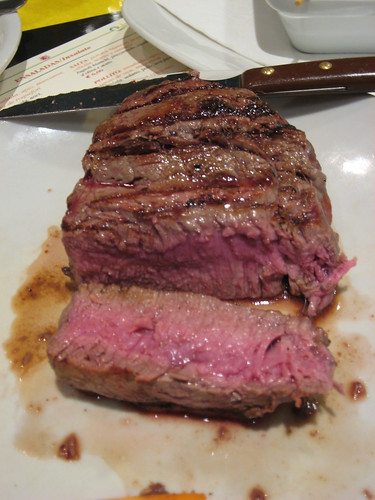
The most important section of steak grilling tips deal with ‘the doneness’ of the steak. A rare-done steak has tender, soft core enveloped in a seared outer layer. A medium-done steak is more evenly cooked with a brown exterior and semi-firm inner layers. Well-done steaks, on the other hand, are firm to the core.

The best way to ensure that a steak is cooked to your desired degree of doneness is to use a thermometer. Do not use forks or spatulas. They would puncture the steak causing the juice to flow out. A rare-done meat should be ready by the time the thermometer reads 140° on the Fahrenheit scale. Similarly, the ideal temperatures for medium-cooked and well-cooked steaks are 160° and 170° respectively. Remember, the cooking process continues even after you take the steak off the grill.

Equipped with these steak grilling tips you will be able to floor your guests. It would be worthwhile to keep some extra servings ready, for your guests might ask additional helpings of succulent grilled bbq sauce and steaks.


6 Steps to Grill the Perfect Steak


There's nothing better than a nicely grilled juicy steak.
But how come I can't duplicate that restaurant, expensive, juicy, melt-in-your mouth, perfectly grilled steak?
Well, I found out how to grill steak perfectly - and here's how you can too.

1. The choice of meat is important!!! Just because the supermarket has labeled the steak "good for grilling" doesn't mean that it is. Lean meat does not do well. You want a piece that has marbling throughout. And these are good cuts: fillet (mignon), top loin (rib eye) - basically the same cuts that are the ones you love in the restaurant.


There's nothing better than a nicely grilled juicy steak.

But how come I can't duplicate that restaurant, expensive, juicy, melt-in-your mouth, perfectly grilled steak?

Well, I found out how to grill steak perfectly - and here's how you can too.

1. The choice of meat is important!!! Just because the supermarket has labeled the steak "good for grilling" doesn't mean that it is. Lean meat does not do well. You want a piece that has marbling throughout. And these are good cuts: fillet (mignon), top loin (rib eye) - basically the same cuts that are the ones you love in the restaurant.

2. Next, proper heating of the grill is vital. If you are using charcoal, spread 2/3 of the bricks on one side and 1/3 of the bricks on the other. That way you have a hotter side for searing the meat and a cooler side for cooking the meat.

If you are using a gas grill, you will lose some of the flavor, but you will want to turn the heat down for the cooking portion.

3. Next, rub both sides of the meat with oil and cover with salt and pepper. Be generous with the salt and pepper because it will fall off during the grilling.

4. Place your meat on the hot side for searing. Cook on each side for three minutes to get the nice grilled meat crust color you love. For a hand test, I've been told that you should be able to hold you hand over the heat for 3 seconds before you can't take it!

5. Place your meat on the cooler side for cooking to your taste. The hand test for the cooler side, I've been told, is 6-7 seconds. You will want to use a timer to cook the meat - or use the slice and peak test to see if the meat is done enough for you. Just don't cut and peek too often or you'll lose all the juice!

6. When the steak is done, take if off the grill and let it set for at least 5 minutes. Some people call it "resting". It allows the juices to spread back out so that you'll have a juicy steak with a nice crust.

Follow these steps and you'll be enjoying perfectly grilled, juicy, melt-in-your-mouth steak that will impress and satisfy the most discriminating steak eater!


Grilled Albacore Tuna Steak Recipes

Steak and Grill Grilled albacore tuna steak recipes add flair to your dinner table. Asians have a way of spicing up any fish dish with their own wasabi powder. This is a Japanese horseradish and many chefs today use this spice to bring a very unique flavor to tuna steak.


Grilled albacore tuna steak recipes add flair to your dinner table. Asians have a way of spicing up any fish dish with their own wasabi powder. This is a Japanese horseradish and many chefs today use this spice to bring a very unique flavor to tuna steak.

Here is just once example of grilled albacore tuna steak recipes that use the spice above. You will need to have the following ingredients to prepare this delectable meal; tuna steaks, ½ cup of teriyaki marinade, 4 ounces of butter or margarine, 1 tablespoon of wasabi powder, 2 chopped green onions, 1 tablespoon of olive oil, peanut oil, or vegetable oil, salt and pepper. First you will need to marinate your tuna steaks in the teriyaki marinade. You should place the tuna steaks in the marinade and turn to coat the entire steak in the marinade. Marinate for at least one hour in a covered dish in the refrigerator. You can marinate overnight if you prefer. When you ready to cook your meal, mix together the wasabi powder and green onions in a bowl and set aside. Get your grill ready; lightly brush your tuna with the oil and season with the salt and pepper. You can use the remaining marinade to baste your tuna steaks while they are grilling. Grill your tuna steaks to desired doneness and serve with the butter.

Instead of using the wasabi butter recipe for your grilled albacore tuna steak recipes you can make your own unique sauce to accompany your delicious meal. You may enjoy a spicier sauce, if so you should try this one. You will need 1/3 cup of your favorite steak sauce, ¼ cup of ketchup, 1 tablespoon of hot sauce or pepper sauce, ¼ cup butter of margarine melted, 1 tablespoon of vinegar, salt, and ½ teaspoon of curry powder. Mix all of these ingredients together and use as a marinade. Also baste your tuna steaks while grilling.


Grill Your Steak The Right Way


No matter what you preference in a steak, maintaining good moisture should always be your goal. When searching for a good cut of beef, look for a cut with good consistent marbling. Fat equals flavor so very low fat content in meat will tend to dry it out and have much less flavor. You should not have to coat a great piece of meat with sauce just to get flavor, in fact you should avoid using a sauce at all.


No matter what you preference in a steak, maintaining good moisture should always be your goal. When searching for a good cut of beef, look for a cut with good consistent marbling. Fat equals flavor so very low fat content in meat will tend to dry it out and have much less flavor. You should not have to coat a great piece of meat with sauce just to get flavor, in fact you should avoid using a sauce at all. You want to see visible grains of fat running through the meat but not large pieces of fat. If you do see larger pieces simply trim them off. As you cook your steak the fat will melt and naturally tenderize the meat.

After removing the meat from refrigeration seasoning the meat with generous amounts of salt and pepper. Many other herb and spice combinations can be added to your taste just be sure you have plenty of salt and pepper in addition to any other seasonings. Allow the meat to come to room temperature before grilling.

When grilling your steak first make sure that you have your grill nice and hot. This will give the outside a nice crust and will also help seal in its natural juices. If you fire flares up at any point, move the meat off the flame. While you want a hot grill, you do not want direct flame on the meat for any extended time period. The worst mistake that most grillers make is to continually flip the meat time and time again. Continually flipping the meat does nothing but cause the meat to dry out. Flipping the steak over and over does not make you a grill master, doing it right, does. In the end you will flip your steak 3 times which will mean you have cooked both sides twice for 3 minutes on each side. For cross-hatch marks on your meat simply turn it 45 degrees when flipping. Total cooking time should be roughly 12 minutes. This will achieve a medium rare steak depending on how hot your grill is. Because every grill it different you will need to experiment to get the desired results.

There is no exact way to tell when the steak is done. Without cutting the meat open and risking the release of its juices, the best way is to either press the meat to judge its tenderness or use a meat thermometer. If you choose not to press the meat, you can use you hand as a guide. For instance if you take you index finger and touch the fleshy part of your palm right under your thumb, that is what rare should feel like. Conversely if you touch you pinky to that same part of your palm that is the consistency of well done. So from finger to the next starting with your index finger and ending with the pinky it would be: rare, medium-rare, medium and well done.

Herb rub:
1 tablespoon dried thyme
1 tablespoon dried oregano
1 tablespoon kosher salt
2 teaspoons freshly cracked black pepper
2 teaspoons mustard powder
2 teaspoons paprika
1 teaspoon onion

Mix all ingredients thoroughly in a bowl. Brush the steak lightly with olive oil and rub in herb rub.


Grilling Secrets for the Perfectly Grilled Steak

Steak and Grill There is nothing quite like a good, juicy steak cooked on a grill. But, many people don't know grilling secrets such as the best cuts to use, what size they should be, how long to cook the steaks, and marinades to use.
Choosing the correct cut of meat is very important when grilling. Some of the best steaks for grilling are the premium cuts such as:


There is nothing quite like a good, juicy steak cooked on a grill. But, many people don't know grilling secrets such as the best cuts to use, what size they should be, how long to cook the steaks, and marinades to use.

Choosing the correct cut of meat is very important when grilling. Some of the best steaks for grilling are the premium cuts such as:

- Filet Mignon

The filet mignon is a stylish cut taken from the heart of the beef tenderloin that has outstanding taste as well as texture.

- Top Sirloin

The top sirloin is a juicy cut taken from the center of the sirloin - the tenderest part - and a great cut for grilling.

- T-Bone

The t-bone is a succulent cut that is a favorite of steak fans. It is both a strip sirloin (with the bone) and a tender filet mignon.

- New York Strip (sometimes known as Kansas City Strip)

The New York strip is such an excellent cut for grilling, many grilling experts refer to it as the "ultimate" steak for cooking out.

- Porterhouse

The Porterhouse is a very large steak that is actually a combination of two steaks: the New York strip on one side and a tender filet on the other.

- Rib Eye

Another classic cut, the rib eye has marbling throughout the meat - making it one of the juiciest cuts as well as very tender.

Thickness of the steak is very important. Each cut should be between 1 inch and 1 ½ inches thick. The strip steaks and top sirloin should be a little less expensive than the filet mignon, t-bone, porterhouse, and rib eye.

Many people like to marinate their steaks before cooking. You can purchase marinades in the grocery store (A1 brand offers several different types) or make your own. If you are not opposed to using alcohol, beer makes an excellent marinade. You can combine 1 12-ounce can of beer, ½ cup of chili sauce, ¼ up of salad oil, 2 teaspoons of soy sauce, 2 gloves of crushed garlic, and 1 teaspoon of Dijon mustard. Let that simmer for 30 minutes over a medium heat. Marinate your meat in the mixture overnight in the refrigerator to tenderize and allow the meat to absorb the flavor. You can also brush your meat with the marinade as you cook. Another great homemade marinade includes 1 ½ cup of steak sauce, 1 tablespoon of soy sauce, 1/3 cup of Italian salad dressing, 1/3 cup of honey, and ½ teaspoon of garlic powder.

Many people prefer to use a rub on their steaks rather than marinate them. A rub is a combination of spice and herbs that is rubbed on the meat about an hour before grilling. It adds a great flavor to the meat, but is quicker than marinade as it does not require the overnight soaking. An excellent recipe for a rub that will give your steaks a smoky flavor is 1 tablespoon of chili powder, onion powder, garlic powder, cumin, cracked black pepper, white pepper, and kosher salt plus 2 teaspoons of oregano, 1 teaspoon of coriander, and ½ teaspoon of cayenne pepper. If you use a rub, be sure to rub the mixture into the cut of meat, not just daub it across the top.

There are other options for cooking steaks other than marinades and rubs. Many times, filet mignons are served wrapped in bacon (held on by a skewer) or you can cut your steak and combine it on a skewer with vegetables like peppers, squash, and onion to make a shish kabob.

Coat your grill with non-stick kitchen spray before you begin to keep your steaks from sticking to the grill. Preheat your grill before placing your steaks on. Resist the temptation to put your steaks on before the grill is properly preheated. The proper temperature for grilling steaks should be around 550 degrees Fahrenheit. Trim any excess fat from the side of the cut to prevent flare-ups and curling when grilling.

You should only turn your steaks once on the grill to prevent drying them out. How long you will cook your steak depends on how well you want it cooked. You can use a grilling fork with a digital thermometer to see how well done your steak is. If you want your steak rare, the temperature should be no more than 150 degrees when done. If you want medium, the temperature should be no more than 160 degrees when done. Finally, if you want well done, you should have a temperature of at least 170 degrees.

After grilling your steak, allow it to set for five minutes before serving to let the juices settle. Serve with a baked potato, salad or other side dish and enjoy!

Saturday, 20 September 2008

Broiled Santa Fe Steaks


This delicious southwestern beef recipe features juicy steak with fresh salsa.

½ cup thick and chunky salsa
½ cup canned black beans, rinsed and drained
2 tablespoons red onion, finely chopped
2 tablespoons fresh cilantro, chopped
1 tablespoon lime juice
1 ½ teaspoons chili powder
½ teaspoon dried oregano
4 boneless beef steaks (about 1 ½ pounds)


Directions

Mix salsa, beans, onion, cilantro, lime juice, and ½ teaspoon of the chili powder. Cover and refrigerate while preparing steaks. Set oven control to broil. Sprinkle remaining 1 teaspoon chili powder and the oregano over both sides of beef; gently press into beef. Place beef on rack in broiler pan. Broil steaks with tops 4 to 5 inches from heat for 6 minutes; turn. Broil 2 to 5 minutes longer for medium doneness. Serve steaks with salsa mixture on top.


Grilling Steak Tips


Count the number of times you stared at the mere sight of grilled steaks and barbecues served on the table! Actually, it is all ‘the doing’ of the great Grilling art that gives BBQs and steaks their irresistible flavors and looks. You too can dish up lip smacking, shapely steaks if you follow some infallible steak grilling tips.


By the way, grilling steaks is not just a process, it is more about preparations and involvement, as you will understand from the following steak grilling tips: Going ahead with the practical details of the grilling process, the first thing you will have to ensure is the quality of the raw material. Regardless of whether you are grilling fish or beef shoulders, tenderloin or sirloin steaks, the bottom line is fresh raw materials make the best steaks. Steaks or fillets in the range 1.25 inches to 2.25 inches grill well. A little fat enhances the taste of a bar-b-q but too much of it causes the meat to shrink. Fat, likewise, adds to the palatability of the grilled steak, but then it also increases health risks. Therefore, a healthy tip would be to remove excess fat. The next sets of steak grilling tips are regarding seasoning processes.


You can season the steak with salt and pepper however, some prefer vegetable oil brushings along with salt and pepper seasoning or bbq rubs . Leaving the seasoning-coated steak for 30 minutes at room temperature will treat the meat, making it tender and augmenting its natural flavor. Two tablespoons of melted unsalted butter added to the seasoning will give the meat extra delicate flavor. Now, getting down to the real grilling business, the first tip for you would be regarding the grill itself. You need to preheat the grill before placing the fish or meat steak. Follow this with oiling the grates if you are grilling some meat steak. For a fish steak, you can place a thin hole-poked foil on the grates, thus preventing the fish from sticking. The most important section of steak grilling tips deal with ‘the doneness’ of the steak. A rare-done steak has tender, soft core enveloped in a seared outer layer. A medium-done steak is more evenly cooked with a brown exterior and semi-firm inner layers.


Well-done steaks, on the other hand, are firm to the core. The best way to ensure that a steak is cooked to your desired degree of doneness is to use a thermometer. Do not use forks or spatulas. They would puncture the steak causing the juice to flow out. A rare-done meat should be ready by the time the thermometer reads 140° on the Fahrenheit scale. Similarly, the ideal temperatures for medium-cooked and well-cooked steaks are 160° and 170° respectively. Remember, the cooking process continues even after you take the steak off the grill. Equipped with these steak grilling tips you will be able to floor your guests. It would be worthwhile to keep some extra servings ready, for your guests might ask additional helpings of succulent grilled bbq sauce and steaks.


Tips for Grill Owners

Grilling, or Barbequing is a true American tradition. Many Americans are finding themselves with a grill for the first time. Good experiences Barbequing with your grill will surely lead to using your grill more and more.

Planning Ahead Barbequing
Barbequing has been around since early cavemen figured out that food tasted great after being cooked on an open fire. Perhaps one of the main memories attached to a family barbeque is what was on the menu that day. Barbequing opens a whole array of types of foods available. The type of foods you serve should largely depend on your crowd and the event in which you are celebrating. With the wide range of possibilities, you are sure to find at least a few items that will please your crowd.
Another potential issue when barbequing is the weather. While you will not be able to guarantee that the weather stays nice your barbeque event, a certain amount of planning will help you avoid the days in which barbequing is just simply out of the picture. Watch the weather channel or check online for your weekly forecast. If rain or cold weather is likely on the day you were thinking about having your barbeque, it may be a good idea to wait for a better forecast.


Make sure when Barbequing that you prepare ahead for your barbeque. 12 to 24 hours before you plan on beginning the party, make sure to thaw, prepare, and marinate the meat you will be cooking. Once you have the meat stored away, soaking up the marinate, then you must start thinking about what types of side dishes you will be having. If you want a completely tradition barbeque, you may want to stick with traditional sizes. Traditional barbeque sides include potatoes, potato salad, baked beans, and coleslaw.

Maintenance Barbeque grill
You will need some common household items on hand when it comes time to clean your barbeque grill.
Brass wire grill brushSteel wool pads, preferably that contains soap already. Mild dish soap Sponge or dishclothSpray cooking oilDry baking soda Aluminum foil
The first thing that should always be done to your grill is a routine brushing. Using your brass wire grill brush (or other brush suitable to your type of grill) you should brush off all the surfaces. By routinely brushing your barbeque grill, you will prevent any type of buildup. If buildup from food is left to long, it can become increasingly difficult to remove. Once you have cleaned the surfaces of your grill, then you must focus on its racks. The racks in your grill are especially important as this is where the food touches when it is cooking. You will have to use the wire brush to remove as much buildup as possible. Once you remove as much as possible, start washing the racks with dish soap. If the racks are really dirty, you may also want to use the steel wool pads. Be sure to completely rinse off all soap and residue before cooking on these racks again.

This process should be completed each and every time you cook on your barbeque grill. If these steps are not taken, you may find it increasingly difficult to clean your grill, and may find that damage will occur.
The majority of problems that arise from barbeque grills comes from lack of cleaning and maintenance. That means if you notice something does not seem quite right with your barbeque grill, chances are it can be fixed with just a simple cleaning. Even if you clean it, and still find that it is having problems, at least you saved yourself the potential embarrassment of taking it to a professional only to find out all it needed was to be cleaned.

Finally, one method of preventing problems with your barbeque grill is protecting it from the outdoors. Covers are available for grills in all shapes and sizes, so chances are, you will find one that fits your grill. If you have a cover for your barbeque grill, then all you will ever need to do is do the regular maintenance listed above. Happy Barbequing


Tuesday, 16 September 2008

Tips Steak Cooking


Steaks, a half hour to an hour before cooking lightly baste with oil and season as you prefer. It’s fine to do this at a longer interval prior to cooking, such as the day before, but in our experience little additional benefit is gained, unless you are getting into the 1.5” and up thickness range.
Then, for steaks approximately 1” thick, grille or fry over medium-high to high heat for approximately four minutes per side for a medium-rare steak (and please, please… don’t cook them well done!) For steaks in the 1.5” range; medium-high heat for five to six minutes per side will yield the same results.
Basically, the thinner your steaks, the higher temperature and shorter duration you should use.


Saturday, 6 September 2008

Tell How good a steak is going to taste by looking

Can you tell how good a steak is going to taste by looking at it? The government thinks you can. That's why, when a USDA meat grader assesses the quality of a beef carcass, he or she makes an incision between the 12th and 13th rib, takes a good look at how much marbling there is, and assigns the meat a grade, from the highest, Prime, to Choice and Select and all the way down to Canner. That's why a well-marbled steak, one that is abundantly flecked with little specks and streaks of white fat, costs a lot more than a steak that's all red muscle.

But is marbling all there is to a good steak? Doesn't, say, a cow's diet have something to do with the way a steak tastes? And can someone please explain why that gargantuan USDA Prime strip loin I ate in Las Vegas last year had about as much flavor as a cup of tap water? I decided to find out for myself. My mission: to taste steaks from cattle raised in very different ways and see how they stack up.


To understand good steak, it helps to know a thing or two about how it gets on your plate. These days, most calves are born on ranches, suckled by their mothers, and then sent out to pasture. When they reach 6 months, they're sent to a feedlot where they're "finished" on grain, usually corn. Grain isn't a cow's natural diet, but it's the feed of choice for two reasons: It makes cattle gain weight quickly, and it results in well-marbled beef.


But according to the ranchers and food scientists I spoke to, there's a lot more to a good rib-eye than intramuscular fat. A few other factors to consider:
Breed. Angus is currently the most popular among North American ranchers. This is partly due to economics—Angus cattle mature quickly and put on weight well—but also because Angus beef is reliably marbled and tender. Not all well-marbled steaks come from Angus cows, however. Grain-feeding techniques have become so effective that even dairy cattle (such as Holsteins) can achieve a grade of Prime. (According to Cattle-Fax, a cattle-marketing information service, 17 percent of American beef comes from dairy cattle.) Does a Prime steak from a dairy cow taste as good as a Prime steak from an Angus cow? Every rancher, meat packer, and butcher I spoke to told me an Angus steak would taste better. But good luck telling the two apart at the supermarket.


Feed. Just as soil affects the quality of wine, a cow's diet can change the quality of its flesh. Some North American cattle are finished on wheat or barley rather than corn. Is there a difference? One rancher told me that barley makes for flavorful beef and warned that wheat can make beef tough. Another rancher said, "Corn is the worst. It results in the greatest lack of flavor in beef." And what about grass-fed beef? Raising a cow on grass alone is ecologically friendly. But does it taste any good?

Hormones. Almost all feedlot cows are injected with growth hormones to help them gain muscle mass; critics charge that doing so merely causes cows to retain water and produces bland meat.
Aging. Steak from a freshly slaughtered cow is stringy and tough. For this reason, beef is aged, a process that tenderizes it and enriches the flavor. Traditionally, beef was hung in a cold room, where natural enzymes would break down the muscle fibers. Dry aging, as it's known, isn't cheap. The beef loses weight to evaporation, and the moldy crust that develops on the exterior has to be lopped off, which makes the remaining beef more expensive. In the 1970s, industrial meat processors opted for wet aging—sealing entire cuts of beef in cellophane—because it's cheaper. But most beef connoisseurs agree that dry-aged beef tastes better.
Before you walk into your neighborhood butcher and say, "Three rib-eye Angus steaks, please, pastured in the Rocky Mountain foothills, finished on barley, but with a hint of oats, and dry-aged for 28—no, make that 29—days," keep in mind that as a consumer, such choice does not exist. That said, if you scour specialty butcher shops or Google "steak," you'll discover other options, including naturally raised, grain-fed, and grass-fed beef. Which leaves carnivores with the question: Which steak tastes the best?


Methodology:We sampled rib-eye steaks from the best suppliers I could find. The meat was judged on flavor, juiciness, and tenderness and then assigned an overall preference. The tasting was blind, except for me. (Someone had to keep track of things.) Cooking method: Each steak was sprinkled with kosher salt, then sent to a very hot gas-fired grill, flipped once, and, when just verging on medium-rare, was removed and rested under foil for five minutes.


The Results:From worst (which, in all fairness, was still a decent steak) to first:

USDA Prime Beef, Wet AgedPrice: $32.50 per poundAging: WetPurveyor: Allen Brothers (http://www.allenbrothers.com/)What it is: The best beef the industrial system has to offer. Only 2 percent of steak receives the lofty grade of Prime.The knock against it: Feedlots are often nasty places, infamous for their cramped conditions, unnatural diets, contaminated groundwater, and clouds of fecal dust.


These steaks may have come from one of the more humane operations. Unfortunately, it's simply not possible to know.Breed: Impossible to say, though Allen Brothers' suppliers guarantee that their steaks are from high-quality beef breeds, the majority of which are Angus.Hormones? Likely. Raw impressions: Of all the competitors, these USDA Prime steaks looked the best raw. They had a pleasing shape, no unappetizing thick veins of fat, and abundant marbling. One taster's note: "Now those look like the kind of steaks I'd spend money on."Tasting notes: This steak was juicy and so tender you could have practically cut it with a Q-tip. The only problem? Flavor—there wasn't much. Comment: "Not something that would have impressed me had I bought it at the supermarket."


USDA Prime Beef, Dry AgedPrice: $35 per poundAging: DryPurveyor: Allen Brothers (http://www.allenbrothers.com/)Raw impressions: Visually, it was impossible to distinguish the dry-aged from the wet-aged rib-eyes. Tasting notes: This steak had more flavor than its wet-aged sibling. Tasters described it as "woody" and "smoky," although the texture reminded one taster of liver. Despite all the time it spent hanging in a cold room losing moisture, it seemed juicier than the wet-aged steak.


Wagyu BeefPrice: $40 per poundAging: DryPurveyor: Strube Ranch Gourmet Meats (Wagyu beef from a different supplier can be purchased online here: www.morganranchinc.com/store/index.shtml)What it is: The Japanese have a thing for incredibly marbled beef, which is known as Kobe beef. According to legend, they feed cows a secret ancient recipe that includes beer and keep their muscles tender by massaging them with sake. This beef was raised on American soil, so it can't technically be called Kobe. But the breed—called Wagyu—is the one that the Japanese use, and the method of raising them is comparably particular. At about 9 months of age, Wagyu cattle are sent to a small, Kobe-style feedlot, where they spend more than a year eating a diet that includes some corn, but a lot of roughage as well. After that, they're sent to a finishing lot where they eat an all-natural but top-secret diet. The knock against it: The price. Also, there are Wagyu-beef enthusiasts who say cooking it like a regular steak will lead to disappointment and an acute sense of having been ripped off. As the "foie gras" of beef, they maintain, it's better suited to searing or being served raw in, say, a miso-ginger-sesame-sake dressing.Hormones? None.Raw impressions: On looks alone, this steak faired the worst. The fat appeared pallid, and the meat possessed a gamey smell that had some tasters wondering if it had gone off.Tasting notes: When cooked, though, what started out as a peculiar aroma mellowed into a distinctive taste that everyone enjoyed, although to varying degrees. (One person said: "I like it in the same way I like blue cheese.") The consensus: "Gamey, strong flavor. I like it."


Naturally Raised Grain-Fed BeefPrice: $26.70 per poundAging: DryPurveyor: Niman Ranch (http://www.nimanranch.com/)What it is: As with industrial beef, these cattle are finished on grain at a feedlot, which makes for well-marbled steak that is consistently tender. But Niman Ranch claims to raise cattle "with dignity." Feed is sourced locally. The feedlot is less crowded and features shaded areas and sprinklers where cattle can cool off. Niman Ranch cattle are finished on a blend of grain—including barley, corn, soy beans, and distiller's dry grain—along with plenty of roughage, which makes the grain easier on bovine stomachs. Also, Niman Ranch waits an extra year before sending cattle to the feedlot on the theory that steaks from an older cow, though slightly less tender, will taste better.The knock against it: It's pricey.Breeds: Angus, Hereford, and Short Horn Hormones? NoneRaw impressions: Niman Ranch doesn't sell its beef based on a USDA grade because Bill Niman doesn't believe in the direct correlation between marbling and eating quality. That said, these steaks were the most marbled of the bunch. Tasting notes: Gustatory joy. Everyone loved this steak, declaring it juicy, tender, and, most importantly, bursting with flavor. Comments were roundly flattering, proclaiming it to be "full bodied" with "a good steaky taste," "mouth-filling and rich—holy cow!"
And the winner is…


Grass-Fed BeefPrice: $21.50 per poundAging: DryPurveyor: Alderspring Ranch (http://www.alderspring.com/)What it is: Beef from cows that have never ingested anything other than mother's milk and pasture, which is just as Mother Nature intended. Like great wine and cheese, grass-fed beef possesses different qualities depending on where it's grown and what time of year it's harvested. The grass-fed steaks for this experiment came from a ranch in Idaho where cattle graze on orchard grass, alfalfa, clover, and smooth brome (a type of grass) in the summer and chopped hay in the winter. Also: Some studies have shown that grass-fed beef is lower in saturated fat and higher in omega-3 fatty acids, making it healthier than regular beef. The knock against it: Consistency, or lack thereof. One grass-fed rancher I spoke to refused to send me any steak for this article because, he said, it sometimes tastes like salmon. Restaurants and supermarkets don't like grass-fed beef because like all slow food, grass-fed beef producers can't guarantee consistency—it won't look and taste exactly the same every time you buy it. Grass-fed beef also has a reputation for being tough.Hormones? NoneBreeds: Alderspring cattle are 90 percent Black and Red Angus, with some Hereford and Short Horn, Salers, and Simmental bred in. ("Red Angus cattle finish particularly well on grass," according to Glenn Elzinga, who runs Alderspring Ranch.)Raw impressions: Not good. It had the least marbling, and what little fat it had possessed a yellowy tinge. Tasting notes: Never have I witnessed a piece of meat so move grown men (and women). Every taster but one instantly proclaimed the grass-fed steak the winner, commending it for its "beautiful," "fabu," and "extra juicy" flavor that "bursts out on every bite." The lone holdout, who preferred the Niman Ranch steak, agreed that this steak tasted the best, but found it a tad chewy. That said, another taster wrote, "I'm willing to give up some tenderness for this kind of flavor."
The Verdict: Marbling, schmarbling. The steak with the least intramuscular fat tasted the best—and was also the cheapest. That said, the steak with the most marbling came in a not–too-distant second. Do the two share anything in common? Interestingly, neither was finished on straight corn or treated with hormones. Both steaks also hail from ranches that pride themselves on their humane treatment of bovines. That made for an unexpected warm and fuzzy feeling as we loosened our belts, sat back, and embarked on several hours of wine-aided digestion.


Best Steak and Grill Information

Search The Steak and Grill world Web

Custom Search